Brief History and Facts
Tracing the roots of Bangar, La Union’s weaving heritage and its namesake tree.

ELYU Herald - The Pulse of La Union
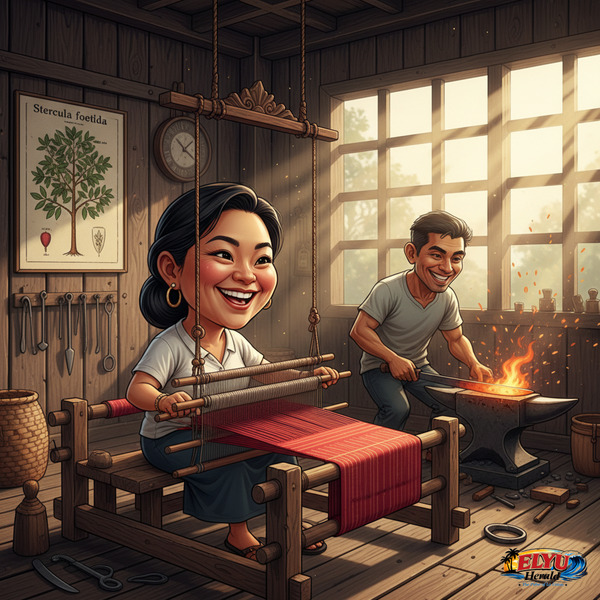
According to the Provincial Government of La Union, the municipality of Bangar was established as a parish in 1700 and takes its name from the native bangar tree (Sterculia foetida). Historical records indicate that this tree was once abundant throughout the region during the Spanish colonial period.
In Bangar, the tree served as a vital economic resource for early settlers. While the fruit is known for a strong odor, the wood provided durable material for home construction. Furthermore, the fruit was processed with natural oils to create a deep-red dye, which became essential for the town’s traditional inabel hand-weaving industry.
The durability of the fabric produced in Bangar earned a historical reputation, with the textiles often utilized as sails for European vessels. Today, the town maintains this legacy as local artisans continue to operate antique wooden looms to produce traditional cloth. This preservation effort keeps the connection between the region’s natural history and its cultural identity intact for future generations.
SOURCE: PGLU